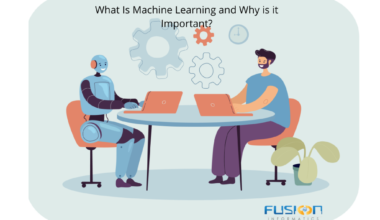
The workplace is changing faster than ever. Organizations are shifting from manual processes to intelligent systems powered by artificial intelligence and automation. An AI and Automation company now plays a crucial role in helping businesses prepare for the future of work. With automation advancing across industries, the way people work, collaborate, and deliver value is being completely redefined.
The Evolution of Work in the Digital Era
Work has always evolved with technology. From the industrial revolution to the rise of computers, each shift changed employment. However, the integration of artificial intelligence and automation is creating an even more dramatic transformation.
Today, businesses are rethinking how tasks are performed. Manual processes are being replaced with AI-driven workflows. Employees are now empowered with tools that boost efficiency and reduce repetitive tasks. Consequently, this transition creates opportunities for innovation and new job roles.
The Role of AI and Automation Companies in Shaping Work
To navigate this transformation, businesses rely on an AI and Automation company. These companies provide expertise in building intelligent systems that streamline operations. They design solutions for industries like healthcare, retail, finance, and manufacturing.
Additionally, they help organizations balance human creativity with machine efficiency. For example, while AI analyzes data, humans focus on strategy and relationship-building. Therefore, businesses gain speed without losing the human touch.
How AI and Automation Are Changing Jobs
The impact on employment is significant. Some traditional roles are being automated, while new jobs are being created. For instance, routine tasks like data entry, scheduling, and reporting are increasingly automated.
At the same time, demand is rising for roles like AI trainers, data analysts, and automation specialists. Furthermore, companies now need employees who can manage AI tools, interpret insights, and ensure ethical use.
Increased Productivity and Efficiency
One major benefit of automation is productivity. AI tools handle repetitive tasks with accuracy and speed. Employees can dedicate their time to critical problem-solving and innovation.
For example, customer support is evolving with AI-powered chatbots. These tools handle simple queries instantly, while humans manage complex issues. This balance leads to better customer satisfaction and improved efficiency.
New Skills for the Future Workforce
The rise of automation requires employees to adapt. Therefore, reskilling and upskilling are now essential. Skills in data literacy, critical thinking, and technology adoption are becoming more valuable than ever.
Governments, educators, and businesses must collaborate to prepare the workforce. Training programs focused on digital skills will help employees remain relevant in an AI-driven workplace.
AI and Automation in Different Industries
The impact of intelligent technologies spans across industries.
- Healthcare – AI supports doctors with diagnostic tools and personalized treatment recommendations.
- Finance – Automation enhances fraud detection and real-time decision-making.
- Retail – AI improves inventory management and personalized shopping experiences.
- Manufacturing – Robots and smart sensors increase production accuracy and reduce downtime.
In each industry, an AI and Automation company helps tailor solutions to meet specific needs.
The Human-AI Collaboration
The future of work is not about replacing people. Instead, it’s about collaboration between humans and machines. While AI handles data-heavy tasks, humans focus on creativity, empathy, and strategic thinking.
For example, in law firms, AI reviews contracts, but lawyers use judgment to provide legal advice. Similarly, in financial services, AI predicts market trends, while advisors guide clients with personal insights.
Challenges Ahead
Despite the benefits, challenges remain. Businesses must address issues such as:
- Job Displacement – Some traditional roles may disappear, leading to workforce transitions.
- Ethical Concerns – Bias in AI models can affect fairness in decision-making.
- Data Privacy – Organizations must ensure strict data protection while using AI.
Addressing these challenges requires strong governance and responsible implementation. Transparency will help businesses maintain trust in their use of AI.
The Role of Policy and Regulation
Governments also play a role in shaping the future of work. Policies must encourage innovation while protecting workers. Incentives for reskilling, along with regulations on data use, are critical for sustainable growth.
Moreover, global collaboration will help create universal standards for AI deployment. This ensures businesses across countries can benefit fairly from emerging technologies.
Why Businesses Must Act Now
The transformation is happening rapidly. Companies that delay adoption risk falling behind competitors. Partnering with an AI and Automation company enables organizations to stay agile, efficient, and innovative.
By acting now, businesses can shape a workforce that thrives in a technology-driven economy. Furthermore, employees gain opportunities for meaningful and rewarding work.
The Future Outlook
Looking ahead, the workplace will be increasingly hybrid, digital, and intelligent. Teams will combine remote collaboration with AI-driven support. Decision-making will rely more on predictive analytics, while automation ensures smoother workflows.
Ultimately, the future of work is not a threat but an opportunity. By embracing change, organizations can create environments that support both efficiency and creativity.
Are You Ready for the Future of Work?
AI and automation are no longer distant possibilities. They are transforming how businesses operate and how employees deliver value. Partnering with the right AI and Automation company will help you unlock these opportunities.
The time to act is now. Embrace intelligent technologies, prepare your workforce, and build a future-ready business.