What if the bottleneck in your business was never the technology — but the size of the team you thought you needed to wield it? Can Vibe Coding Replace Large Engineering Teams? This question is no longer hypothetical.

Today, a growing cohort of founders and product leaders are shipping production-grade applications in days — not months — by embracing an emerging methodology called Vibe Coding. Furthermore, they are doing it with little or no traditional software engineering background.
The implications for digital transformation are profound. Businesses that previously required large, expensive engineering departments are beginning to rethink that assumption entirely. However, understanding the opportunity requires separating genuine capability from hype. This article, therefore, explores what Vibe Coding actually means for your organization, how agentic AI systems make it possible, and where the real risks lie.
What Is Vibe Coding — and Why Are Business Leaders Paying Attention?
The term Vibe Coding was popularized by AI researcher Andrej Karpathy in early 2025. Essentially, it describes a mode of software development where a person communicates intent — in plain language — and an AI system translates that intent into working, executable code. The developer, in the traditional sense, largely steps aside.
This is, however, more than just an improved autocomplete. Modern Vibe Coding is powered by agentic AI frameworks — systems that can autonomously plan multi-step tasks, use tools, call APIs, run tests, and iterate based on feedback. Consequently, the AI does not just write a function; it builds features, connects databases, and handles edge cases with minimal human intervention.
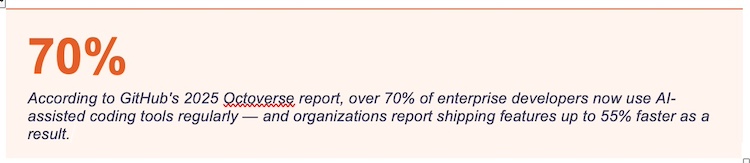
For business leaders, this shift matters for a straightforward reason. Traditionally, executing a digital transformation initiative required assembling a team — product managers, backend engineers, frontend developers, QA analysts, DevOps specialists. Today, agentic AI can compress or eliminate many of those roles within a carefully scoped project. As a result, the cost and time barriers to building custom software are falling sharply.
Common Challenges Businesses Face in the Age of Agentic Development
Despite the promise, most organizations still face deeply familiar obstacles when attempting to adopt AI-driven development methods. Consequently, the excitement around Vibe Coding is often tempered by practical frustrations.
- Talent scarcity: Skilled engineers remain expensive and difficult to recruit, especially in specialized domains like AI, IoT, and mobile development.
- Slow iteration cycles: Traditional sprint-based development means most product ideas take three to six months to validate. By then, the market has frequently moved.
- Integration complexity: Connecting AI tools to legacy systems, enterprise databases, or IoT hardware requires domain expertise that is hard to find inside a single team.
- Security and governance gaps: AI-generated code, when unreviewed, can introduce vulnerabilities. Furthermore, regulatory compliance adds another layer of complexity for enterprises.
- Misaligned expectations: Many leaders believe AI will ‘do everything.’ However, without a clear strategy and human oversight, the output of agentic systems can drift from business objectives.
These challenges are real and should not be dismissed. Nevertheless, understanding them clearly is the first step toward addressing them deliberately — which is precisely what Vibe Coding, used correctly, enables.
How Vibe Coding and Agentic AI Solve These Problems
The core mechanism behind Vibe Coding is a shift in the human-to-software interface. Instead of writing explicit instructions in code, a business leader or product manager describes outcomes. The agentic AI system then generates, evaluates, debugs, and iterates code autonomously.
Moreover, modern agentic frameworks — such as multi-agent pipelines built on models like Claude or GPT-4 — can delegate subtasks to specialized agents. One agent handles the API integration. Another manages the database schema. A third writes and runs unit tests. Consequently, what once required five specialists can often be coordinated by a single person with a clear product vision and access to the right tools.
| Capability | Traditional Team (50 people) | Vibe Coding + Agentic AI |
| MVP development timeline | 3–6 months | 1–4 weeks |
| Prototype-to-feedback loop | Weeks per iteration | Hours per iteration |
| Code generation | Manual; requires specialists | AI-driven; guided by intent |
| Testing and QA | Dedicated team required | Automated agents; human review |
| Cost per feature | High; team overhead | Significantly reduced |
| Domain expertise needed | Full stack specialists | Business logic + AI prompt skills |
It is worth noting, however, that Vibe Coding is not a replacement for engineering judgment in complex, mission-critical systems. Rather, it is a powerful accelerant. Therefore, the most successful practitioners combine AI-generated speed with deliberate human review at critical decision points.
Key Benefits and ROI for Enterprises and SMEs
The business case for embracing agentic AI and Vibe Coding does not rest on novelty. Instead, it rests on measurable outcomes that decision-makers can evaluate directly.
Speed to Market
Perhaps the most immediate benefit is compression of the product development cycle. A startup that previously needed six months to build and launch a mobile application can, with the right agentic tooling, release a testable version in under a month. Furthermore, subsequent iterations happen in days rather than weeks.
Cost Efficiency
Engineering salaries represent one of the largest line items in any technology budget. Consequently, reducing the headcount required to deliver a given product — without compromising quality — directly improves margins. For SMEs especially, this opens up digital transformation projects that would previously have been out of reach financially.
Strategic Flexibility
Because agentic AI can be redirected quickly, organizations gain the ability to pivot. If market feedback demands a different feature set, the cost of change is dramatically lower than in a traditional engineering environment. Therefore, business agility improves alongside development speed.
Democratization of Innovation
Finally, Vibe Coding lowers the barrier to innovation for non-technical founders and business owners. Consequently, domain expertise — knowledge of healthcare, logistics, finance, manufacturing — becomes more valuable than coding skills. The person who understands the problem deeply can now build the solution directly.
Real-World Use Case: The 1-Person IoT Dashboard That Replaced a Six-Month Project
| Case Scenario — SME Manufacturing From Brief to Production in 18 Days Consider a mid-sized manufacturing company in Southeast Asia. They needed a real-time IoT dashboard to monitor equipment health across three factory floors — a project that had been quoted at six months and a significant budget by a traditional development agency. Instead, the company’s operations director — a non-programmer — worked with an agentic AI development environment. Over eighteen days, the director described requirements in natural language. The agentic system generated the backend API, connected it to the existing sensor hardware, built a React-based frontend dashboard, and configured alerting logic. A senior engineer reviewed the output for security and compliance at three key checkpoints. The final product was deployed to production and has been monitoring live equipment data ever since. The total project cost was a fraction of the original quote. Furthermore, the director continues to add features independently — because the agentic system understands the existing codebase. |
This scenario is not an outlier. Similar patterns are emerging across industries — from healthcare app development to retail personalization engines to logistics route optimization. In each case, the enabling factor is not the elimination of human judgment, but rather its elevation. The human defines what matters. The agentic AI builds it
How to Get Started With Vibe Coding in Your Organization
The path to adopting agentic AI and Vibe Coding does not require a wholesale transformation of your technology department overnight. Instead, a structured, phased approach reduces risk while accelerating learning.
- Start with a bounded problem. Choose a single workflow, internal tool, or customer-facing feature that is well-defined and low-risk. This creates a safe learning environment for your team and the AI.
- Select the right agentic framework. Tools like Cursor, Devin, or custom Claude-based agents suit different use cases. Consequently, matching the tool to the problem matters more than picking the most popular option.
- Establish human review gates. Define the three to five checkpoints where a human engineer must review AI-generated code before it progresses. Therefore, speed is preserved without sacrificing governance.
- Build prompt literacy in your team. Vibe Coding rewards those who can communicate clearly. Invest in training your product and business teams to articulate requirements with precision.
- Measure iteration speed, not just output quality. Track how quickly your team moves from idea to tested prototype. This metric will reveal the true ROI of your agentic development investment.
- Partner for complex integrations. When your Vibe Coding initiative touches existing enterprise systems, IoT hardware, or mobile platforms, expert guidance prevents costly rework.
The organizations that will benefit most from this shift are not necessarily the ones with the largest technology budgets. Rather, they are the ones that move first, learn fast, and build the internal muscle to iterate continuously.
Conclusion: The Opportunity Is Real — Execution Is What Separates Leaders from Followers
The 1-person unicorn is not a fantasy. It is an emerging reality — and it is powered by Vibe Coding and agentic AI systems that are improving rapidly. Moreover, the competitive advantage these tools provide is not yet evenly distributed. Consequently, the businesses that move decisively now will build compounding advantages in speed, cost efficiency, and innovation capacity that are difficult for slower movers to close.
Nevertheless, the technology itself is not the hard part. Strategy, governance, and execution discipline are what separate organizations that extract genuine value from those that run exciting pilots and see no lasting change. Therefore, the question for business leaders is not ‘should we explore this?’ — that answer is already clear. The question is: ‘How do we execute this in a way that delivers measurable business outcomes?’
That is precisely the question worth answering with the right partners at your side.
| Ready to Explore What Agentic AI Can Build for Your Business? If your organization is planning to accelerate digital transformation, launch a new digital product, or explore how AI, mobile, or IoT solutions can drive measurable outcomes — the real challenge is not technology. It is execution with clarity and discipline. At Fusion Informatics, we help enterprises and growth-stage businesses design and build scalable digital solutions aligned with business goals. Whether you are exploring AI solution development, mobile app development, IoT implementation, or an end-to-end digital transformation roadmap — we bring the expertise and accountability to turn intent into production-ready outcomes. Our Services: AI Solution Development | Mobile App Development | IoT Solutions | End-to-End Digital Transformation Let’s explore how this can work for your business. Schedule a Discovery Call today. |
Frequently Asked Questions
- What exactly is Vibe Coding, and is it different from no-code tools?
Vibe Coding refers specifically to AI-assisted software development where a person communicates intent in natural language and an agentic AI system generates production-quality code. Unlike no-code platforms, which constrain users to predefined templates, Vibe Coding can produce custom, scalable applications with full code access and no vendor lock-in. It is therefore more flexible and more powerful, though it benefits from technical oversight. - Can non-technical founders realistically build production software with Vibe Coding?
Yes — with important caveats. Non-technical founders can build MVPs, internal tools, and data dashboards effectively. However, production software that handles sensitive data, complex integrations, or large user volumes requires human engineering review at key stages. The most successful non-technical builders combine Vibe Coding's speed with periodic expert review rather than replacing engineering judgment entirely. - How does agentic AI differ from a standard AI coding assistant like GitHub Copilot?
A standard coding assistant suggests code line-by-line or function-by-function. An agentic AI system can autonomously plan and execute multi-step tasks — building features, running tests, calling external APIs, and iterating based on results — with minimal intervention between steps. The difference in scope and autonomy is significant. - What are the security risks of using AI-generated code in enterprise systems?
AI-generated code can introduce vulnerabilities — particularly around input validation, authentication flows, and dependency management — if it is not reviewed by a qualified engineer. Furthermore, enterprises in regulated industries must ensure AI-generated outputs meet compliance requirements. Establishing clear code review gates and using security scanning tools as part of the agentic workflow mitigates these risks effectively. - Is Vibe Coding suitable for IoT and mobile app development, or only web applications?
Vibe Coding is increasingly viable across all three domains. For IoT, agentic AI can generate firmware logic, data pipeline code, and dashboard interfaces. For mobile development, it can produce React Native or Flutter applications from natural language descriptions. Web applications remain the most mature use case, but the capability gap is closing rapidly.
Quick Summary
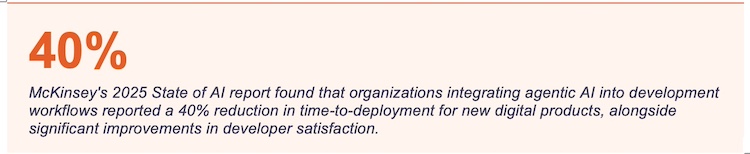
▸ Vibe Coding enables individuals to build production software through natural language, dramatically compressing development timelines. ▸ Agentic AI frameworks plan, execute, test, and iterate multi-step development tasks with limited human intervention between steps. ▸ Enterprises adopting agentic development workflows report up to 40–55% faster time-to-deployment and significant per-feature cost reductions. ▸ The approach is viable for web, mobile app development, and IoT solutions — though complex integrations still require expert oversight. ▸ The primary barrier to adoption is not technology — it is strategy: clear problem scope, defined review gates, and prompt literacy across business teams.